Journal article
Talking to a family member about their hearing loss
Raising the subject of hearing loss with someone you care about can feel delicate. Here are gentle ways to start the conversation, what to listen for, and how to suggest a check at a clinic in Poole.
Why the conversation feels hard to start
Telling someone close to you that they might be losing their hearing rarely goes smoothly. Most people do not notice the change themselves. They think others are mumbling, or that the television is broken, or that rooms have simply become louder than they used to be.
Because of this, mentioning it can feel like an accusation. The person may become defensive, especially if they have been covering for months by nodding along or asking fewer questions in group conversations. A parent who has always managed the household might see any suggestion of decline as a threat to their independence.
The best approach treats the subject as a practical matter rather than a personal failing. Hearing changes happen to almost everyone eventually. Framing it that way removes the sting. You are not diagnosing them. You are noticing something specific and suggesting a straightforward step to find out what it means.
Signs you might notice before they do
People adapt to gradual hearing loss without realising it. You might spot the signs first. Watch for small shifts in daily habits. Someone who used to answer the phone might let it ring now. They may sit closer to the speaker at family meals or turn away from you when you talk, relying on lip movement without knowing it.
Background noise is usually the first thing that causes trouble. If your relative struggles to follow conversations in busy pubs or cafes, that is a common early sign. You can read more about why [crowded rooms make listening so difficult](/what-it-might-be/cant-hear-in-busy-pubs-poole) and what it usually points to.
Another sign is volume. Televisions set far louder than everyone else finds comfortable, or music played at levels that rattle the windows, often mean the listener is compensating. Sometimes the problem is physical blockage rather than nerve damage. A sudden muffled feeling after swimming, for instance, [might just be trapped water or wax](/what-it-might-be/ear-blocked-after-swimming). Either way, noticing these details gives you something concrete to mention later.
How to bring it up without causing upset
Pick a quiet moment. Do not raise the subject during an argument about the television remote or while other people are in the room. A calm walk or a cup of tea at the kitchen table works better.
Speak about what you have noticed rather than what you think is wrong with them. Saying "I noticed you asked Sarah to repeat herself three times at lunch" lands differently than "Your hearing is going." Stick to facts. Facts are harder to argue with and easier to act on.
If they brush it off, leave it alone for a few days. Pushing immediately usually makes someone dig their heels in. When you try again, frame a hearing check as routine maintenance. An [audiologist in Poole](/audiologist-poole) deals with everything from simple wax build-up to age-related changes every day. It is a normal appointment, much like visiting the dentist.
For older relatives, the dynamic carries extra weight. Arranging a [hearing test for an elderly parent](/what-it-might-be/hearing-test-for-a-parent) often requires patience and a willingness to handle the logistics yourself, such as booking the appointment and offering to drive them there.
What a hearing test actually involves
Fear of the unknown stops many people from agreeing to a check. If your relative imagines a complicated medical procedure, they will resist. Telling them what actually happens removes that barrier.
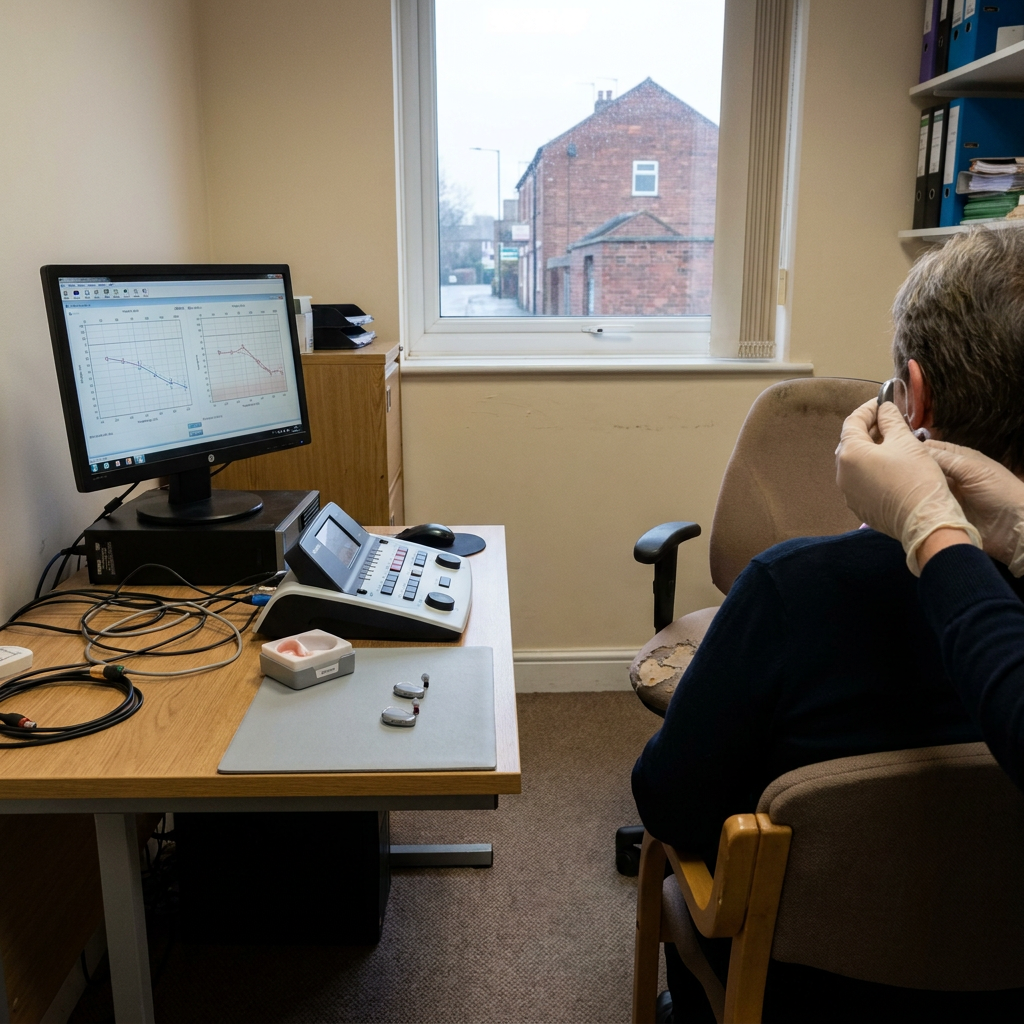
A standard [hearing test in Poole](/hearing-tests-poole) takes place in a quiet room. The audiologist asks questions about daily life and any symptoms, such as [ringing or hissing in the ears](/what-it-might-be/ringing-or-hissing-in-the-ears), which is known as tinnitus. Then the person wears headphones and presses a button when they hear tones at different pitches and volumes.
That is the core of it. There are no needles, no pain, and no wrong answers. You can explain exactly [what happens at a hearing test](/what-it-might-be/hearing-test-questions) so they know what to expect. Some clinics also use a small headband resting behind the ear to check how sound travels through the skull bones, which is called [bone conduction testing](/journal/bone-conduction-testing-why-a-small-headband-is-used).
The whole visit usually finishes within an hour. Afterwards, the audiologist explains the results plainly. Nobody fails a hearing test; the [results simply show where sounds fall](/journal/can-you-fail-a-hearing-test-what-the-results-show) outside the normal range.
What happens after the results come back
If the test shows a change in hearing, the audiologist discusses options. Sometimes the cause is straightforward. Impacted wax can mimic hearing loss entirely, and [ear wax removal in Poole](/ear-wax-removal-poole) using microsuction or irrigation clears it quickly.
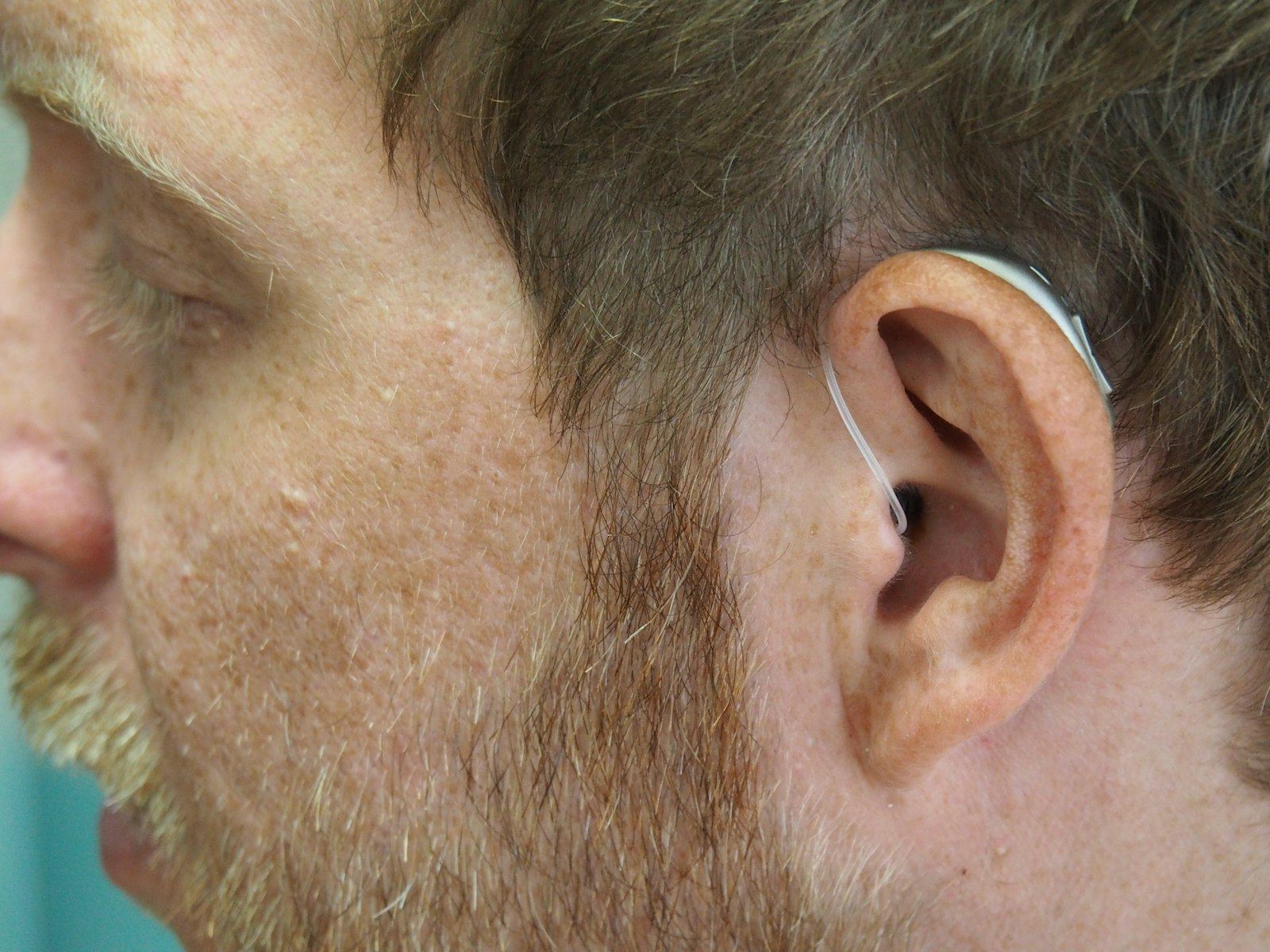
If the loss is permanent, hearing aids are the usual recommendation. Modern devices are small and discreet. An audiologist can explain the different [types of hearing aids available in Poole](/hearing-aids-poole), how they are fitted, and what aftercare looks like. Many people worry they will look obvious or feel uncomfortable, but the fitting process accounts for both concerns.
Local access matters too. If travelling into central Poole is difficult for your relative, clinics operate across the surrounding areas. There are services near [Broadstone](/poole-and-bournemouth/broadstone), [Creekmoor](/poole-and-bournemouth/creekmoor), [Canford Heath](/poole-and-bournemouth/canford-heath), [Hamworthy](/poole-and-bournemouth/hamworthy), [Oakdale](/poole-and-bournemouth/oakdale) and [Corfe Mullen](/poole-and-bournemouth/corfe-mullen). Mentioning a location close to their home makes the idea of attending an appointment feel manageable rather than like a major outing.
Arrange a hearing test in Poole
Send an enquiry about an appointment. The specialist clinic handles the booking directly, and asking a question does not commit you to anything.
- No obligation to proceed
- Local Poole clinics
- Plain, clear answers