Guide
What happens at a hearing test, step by step
Find out what to expect from a hearing test for adults in Poole. Learn how long the appointment takes, whether it hurts, what the results chart means and if you need a GP letter first.

How long a hearing test takes in Poole
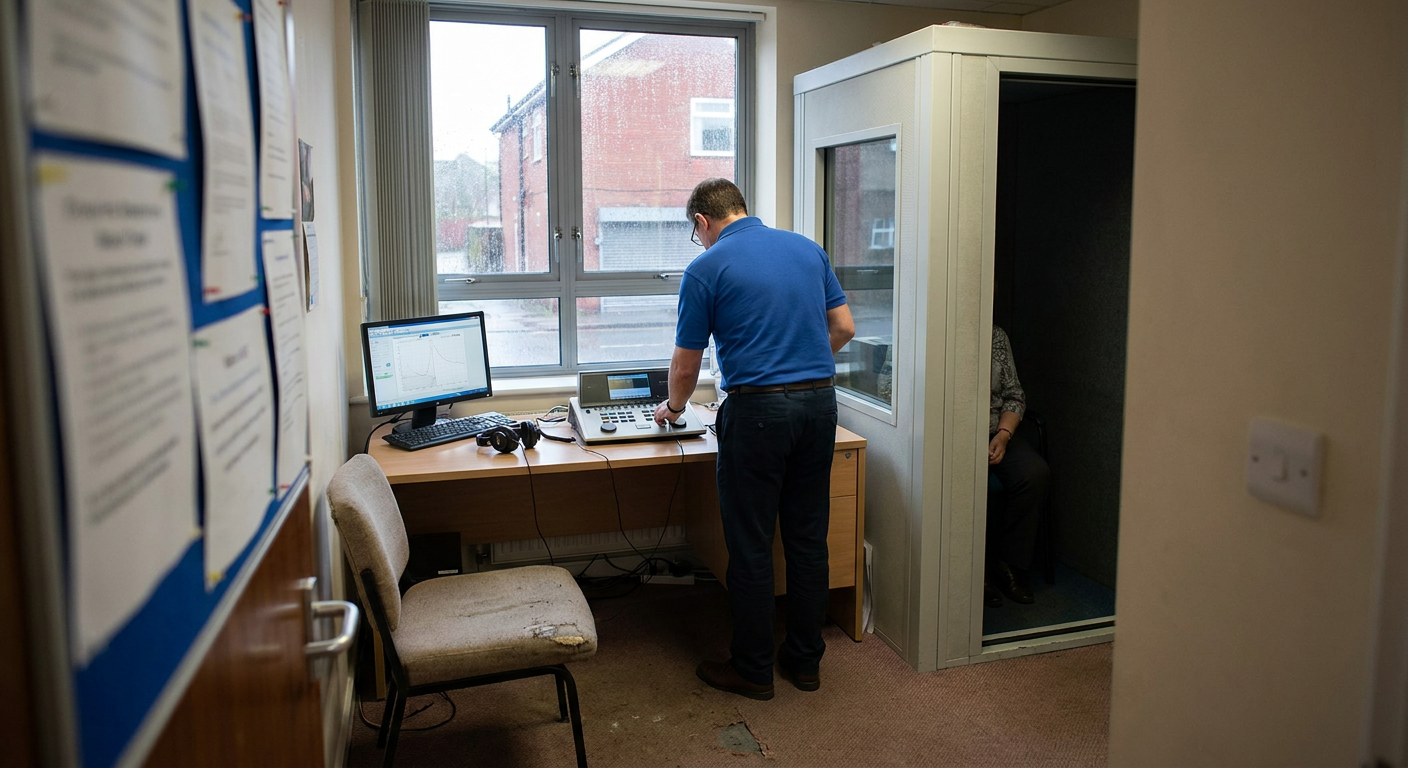
A full hearing test for adults in Poole usually lasts between forty-five minutes and an hour. The audiologist needs time to ask about your daily life, check inside your ears and run through several listening tasks. Rushing the appointment leaves gaps, so setting aside an hour is sensible.
If you are wondering how long a hearing test takes because you have work or childcare to arrange, plan for the longer end. Some checks finish sooner, but allowing a full hour means you will not feel hurried. You can read more about timing on the page covering how long a hearing test takes and what happens next.
The specialist firm carrying out the test will explain each stage as they go. Knowing what to expect helps the hour pass quickly.
Does the test hurt or feel uncomfortable
People often ask if a hearing test is painful. It does not hurt at any point. The audiologist places small earphones or soft foam tips into your ears and plays tones at different pitches and volumes. You press a button or raise a hand when you hear them.
Some parts involve a headband that rests behind your ears to test bone conduction. It presses lightly but should never cause pain. If anything feels uncomfortable, tell the audiologist and they will adjust it immediately.
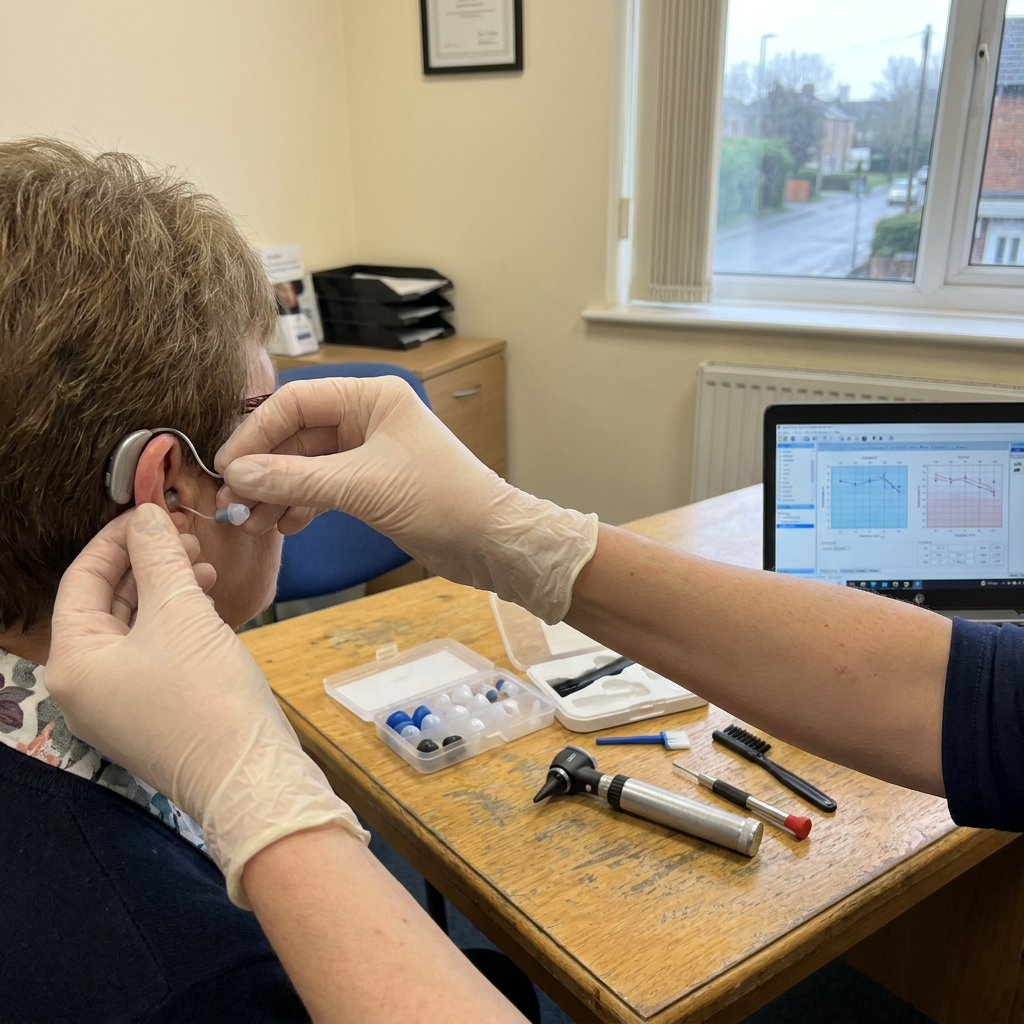
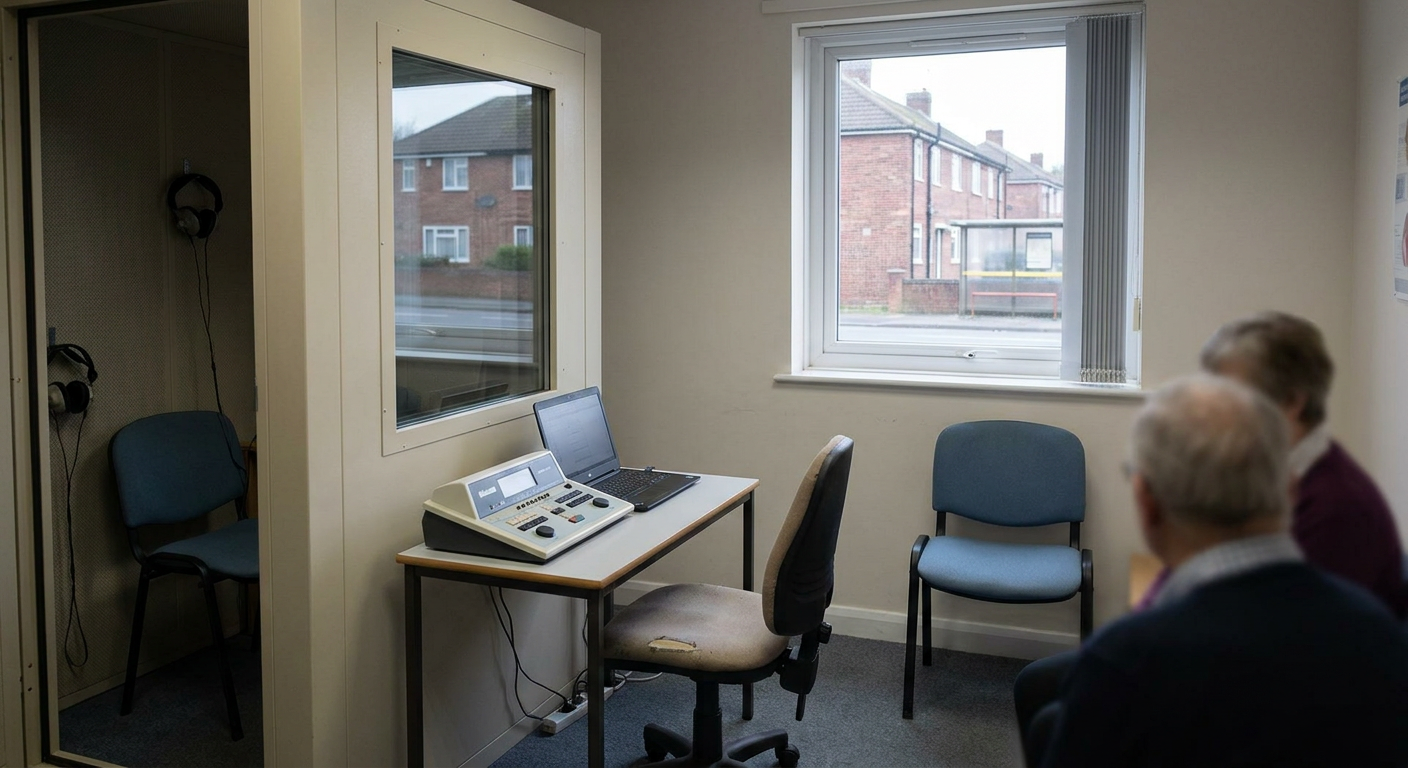
Before the listening begins, the specialist looks inside your ears with a lighted instrument called an otoscope. This is painless too. It simply lets them see if wax or fluid might affect the results. A hearing test what to expect guide cannot promise every moment feels entirely natural, sitting quietly in a booth while wearing headphones is unusual, but nothing about it should hurt.
Reading an audiogram chart after your test
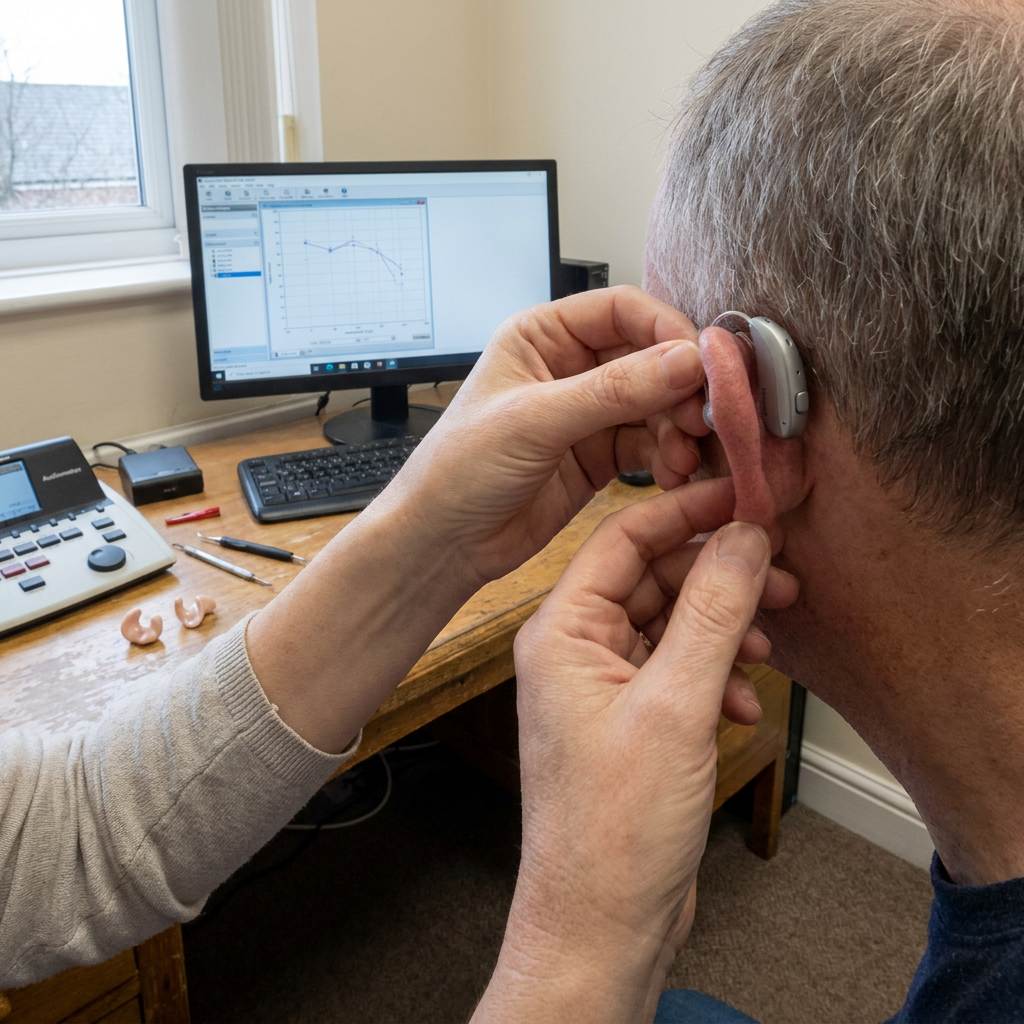
Once the listening part finishes, the audiologist plots the results on a graph called an audiogram. Reading an audiogram chart can look confusing at first glance. The horizontal axis shows pitch, running from low sounds on the left to high sounds on the right. The vertical axis shows volume, with quiet sounds at the top and loud ones at the bottom.
Each ear gets its own line, usually marked with different symbols such as crosses and circles. Where those marks fall tells the audiologist which pitches you hear easily and which require more volume. A mark near the top means you hear quiet sounds at that pitch. A mark lower down means the sound needs to be louder before you notice it.
The specialist walks through the chart with you. They point out where your hearing sits compared to normal ranges and explain what it means for conversations, television and background noise. You do not need to memorise the symbols. The audiologist translates them into plain terms about your daily life.
Do I need a GP referral for a hearing test
You do not need a letter from your GP before booking a hearing test. Anyone in Poole can arrange one directly. People sometimes ask whether they must see their doctor first, especially if they suspect the problem is minor, but a referral is not required.
Going straight to a specialist saves time. The audiologist has the equipment to check your hearing thoroughly and can advise on next steps without waiting for paperwork. If something points toward a medical issue rather than typical hearing loss, the specialist will recommend you visit your GP then.
This applies across the area. Whether you book a hearing test in Creekmoor, Broadstone or central Poole, the process is the same. No gatekeeping stands between you and finding out what is happening with your hearing.
When wax blocks the test
Sometimes the audiologist looks inside your ear and finds a build-up of wax blocking the canal. When that happens, the listening test cannot give accurate results because the wax muffles the tones before they reach your eardrum.
Rather than guessing, the specialist will suggest having the wax removed first. Ear wax removal uses gentle methods such as microsuction or irrigation to clear the blockage safely. Once the canal is open, the hearing test goes ahead as planned.
If you already know your ears feel blocked, perhaps after swimming or during a cold, mention it when you enquire. Arriving with cleared ears saves a second trip. Specialist firms in Poole handle both wax removal and testing, so the whole process stays straightforward.
Normal results but still struggling to hear
It is possible to pass a hearing test and still find noisy rooms difficult. Standard tests measure how quiet a tone you detect in a silent booth. They do not always capture how well your brain separates speech from clattering plates and music in a busy pub.
If your audiogram looks fine but you regularly miss words in groups or crowded cafes, tell the audiologist. They may run a speech-in-noise test, which plays recorded sentences against background sound to see how much you catch. This gives a clearer picture of real-world hearing.
Normal results are good news. But if you still struggle, the specialist can discuss strategies such as seating choices, communication tactics or devices designed specifically for noise. Dismissing your difficulty just because the basic chart looks clear helps no one.
Bringing someone and avoiding sales pressure
You will not be pushed into buying hearing aids at the appointment. The test measures your hearing. If aids would help, the audiologist explains the options and leaves the decision entirely to you. There is no obligation and no hard sell.
Bringing a partner or family member is a good idea. They hear the results explained at the same time and can remind you of details later. They also provide useful context about situations where you seem to struggle, which helps the audiologist build a fuller picture.
After the appointment, you receive a copy of your results and time to think. If you decide to explore hearing aids later, specialist firms in Poole offer fittings and aftercare separately. The initial test is about understanding your hearing, not making a purchase on the spot.
Signs you might need a hearing test
Hearing changes slowly, so you might notice small frustrations before anything seems obviously wrong. If you are wondering what happens at a hearing test, the answers below explain each step. You will find out how long the appointment takes and whether it hurts.
- 1
Turning up the television
Others in the room find the volume too loud, but it sounds comfortable to you. This often points to missing higher pitches.
- 2
Asking people to repeat themselves
You catch that someone spoke but miss the actual words, particularly when several people talk at once or the room echoes.
- 3
Withdrawing from busy places
Pubs, restaurants or group gatherings feel exhausting because concentrating on one voice over background noise takes constant effort.
- 4
Ringing or hissing sounds
A persistent noise in one or both ears when the room is quiet can accompany hearing changes and warrants a proper check.
Private clinic or NHS audiology department
Both routes test your hearing, but they differ in speed, appointment length and follow-up.
Private clinic
- Waiting time
- Appointments are usually available within days or weeks.
- Appointment length
- Typically forty-five minutes to an hour for a thorough check.
- Follow-up care
- Same clinic handles wax removal, aids and ongoing adjustments.
- Referral needed
- No GP letter required. Book directly.
NHS audiology
- Waiting time
- Referral and waiting lists often mean months before the first test.
- Appointment length
- Often shorter, focused on establishing whether treatment is needed.
- Follow-up care
- Further appointments may require returning to the hospital department.
- Referral needed
- A GP referral is usually necessary to access the service.
An audiologist advises which route suits your situation after discussing your symptoms.
Ask about a hearing test in Poole
Send an enquiry to arrange a test or ask a question. The specialist firm receives it and replies directly. Enquiring does not commit you to an appointment or a purchase.
- No obligation
- Local specialists
- Plain answers